
The charm of dark wood in office interiors is undeniable, bringing a sense of warmth and classic sophistication to any workspace. However, dark wood finishes are often associated with traditional designs, which can sometimes feel dated or overly formal in today’s fast-paced work environments. The challenge lies in striking the perfect balance between maintaining the rich character of dark wood while infusing the space with modern design elements. This guide delves into how to effectively modernize an office space with dark wood finishes, making it feel contemporary, inviting, and functional. We’ll explore various aspects of design, including layout optimization, material and finish updates, lighting improvements, color balancing, and the thoughtful integration of modern decor.

1. Layout and Structure
The foundation of any successful office redesign begins with a well-thought-out layout. When dealing with dark wood finishes, it’s important to create a sense of openness to counterbalance the visual weight that darker tones can impose on a space. Start by assessing the current arrangement of your office furniture. Large pieces, such as desks and storage units, should be positioned to maximize both functionality and natural light. Consider placing the desk centrally in the room, allowing for a clear view of the office and any windows. This not only emphasizes the importance of the workspace but also helps to distribute the natural light more evenly throughout the room.
Incorporating built-in cabinetry along the walls can help maintain an open floor plan while providing necessary storage. By recessing these units into the walls, you reduce their footprint in the space, making the room feel less cluttered. Opt for furniture that follows clean lines and minimalistic designs to enhance the modern vibe. It’s crucial to maintain a balance between open space and necessary furnishings, ensuring that the office is both practical and visually appealing.
2. Updating Materials and Finishes
While dark wood is timeless, its heavy appearance can sometimes make a space feel closed-off. One of the most effective ways to modernize a dark wood office is by updating the finishes and introducing complementary materials. A high-gloss finish on dark wood surfaces can reflect light, adding a subtle shine that brightens the room and gives the wood a more contemporary feel. Satin finishes are also a good option, providing a soft sheen that’s both modern and understated.
To create contrast and add visual interest, consider incorporating materials such as glass, metal, or marble. For instance, a glass tabletop or metal hardware can break up the dominance of wood and introduce a sleek, modern touch. When choosing these materials, ensure they harmonize with the existing wood tones rather than clash with them. The integration of these elements should feel seamless, creating a cohesive and sophisticated look throughout the office.
Ensuring continuity in design is essential. All the materials and finishes should complement each other, reinforcing the overall aesthetic of the office. If the wood in your office has a specific grain or color, select other materials that highlight these characteristics without overwhelming them. The goal is to create a layered, textural experience that feels rich and contemporary.
3. Lighting: The Key to Modernization
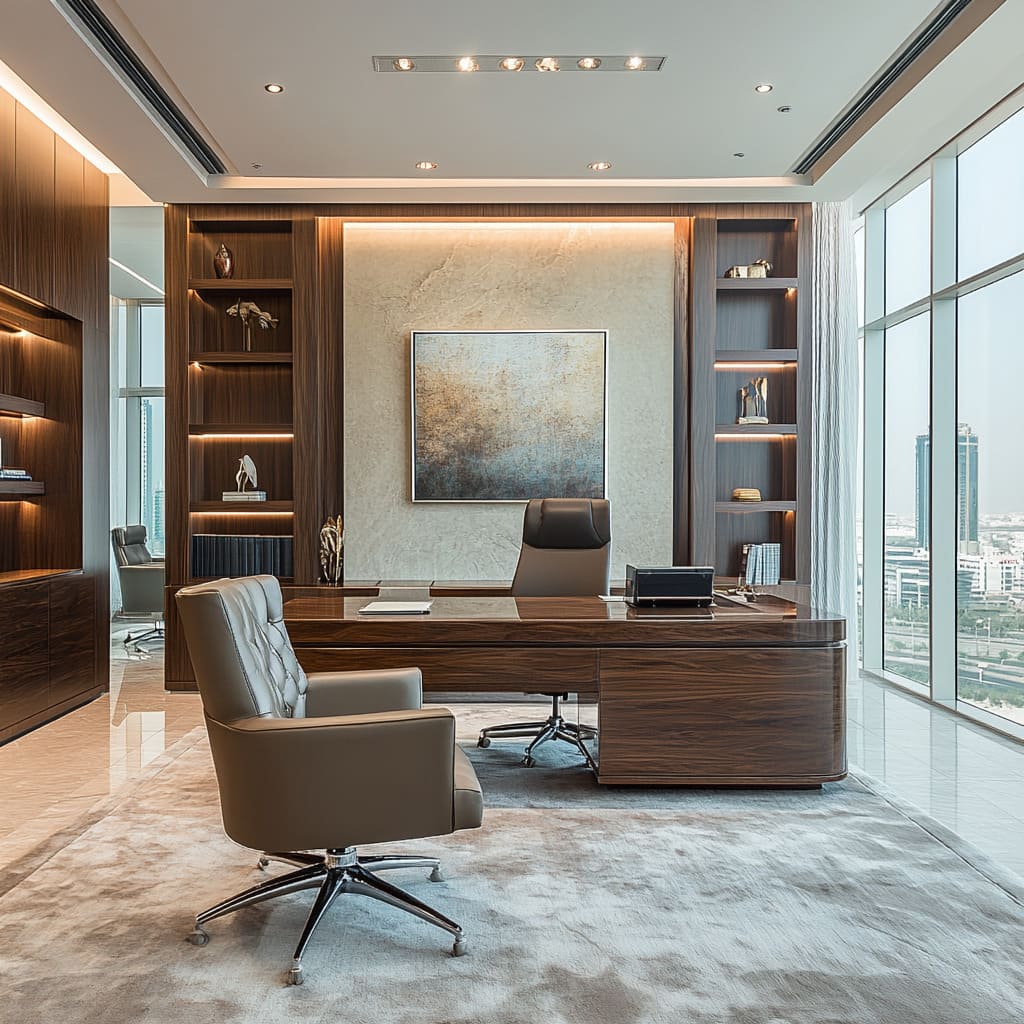
Lighting is one of the most critical elements in transforming a dark wood office into a modern space. Natural light is your best ally in this endeavor. If your office is blessed with large windows, make sure to utilize this feature to its fullest potential. Position your desk and other key furniture to take advantage of the natural light, creating a bright and inviting workspace. To maintain privacy while allowing light to flow in, consider using sheer curtains or blinds that can be adjusted according to the time of day.
In terms of artificial lighting, a layered approach works best. Recessed ceiling lights provide even illumination without overpowering the room, while strategically placed LED strip lights can highlight specific architectural features, such as built-in shelving or decorative wall panels. Task lighting is equally important, particularly for workspaces that require focused light. Desk lamps or adjustable wall-mounted lights can provide direct light where needed, enhancing both functionality and aesthetics.
The color temperature of your lighting also plays a significant role. Warmer tones complement dark wood, making the space feel cozy and inviting, while cooler tones can create a crisp, modern atmosphere. A combination of the two can be used to create different moods depending on the time of day or the type of work being done.
4. Flooring and Rugs: A Modern Foundation
The choice of flooring in your office can significantly influence its overall look and feel. For a modern take on dark wood interiors, a plush, neutral-toned carpet works beautifully. The softness of carpet underfoot not only adds comfort but also contrasts nicely with the hard surfaces of wood and metal. The color of the carpet should harmonize with the rest of the room’s palette, enhancing the warmth of the wood while introducing lightness into the space.
Rugs are another powerful tool in modernizing an office. A well-chosen area rug can define specific zones within your office, such as a seating area or the space around your desk, adding both texture and visual interest. Opt for rugs with simple, geometric patterns or solid colors that echo the modern theme. The rug’s texture should complement the other elements in the room, creating a balanced and cohesive look.
Balancing hard and soft surfaces is key to achieving a modern aesthetic. While dark wood brings a sense of gravitas and tradition, softer elements like carpets and rugs can lighten the mood, making the space feel more inviting and less formal. The goal is to create a workspace that is both functional and comfortable, encouraging productivity and well-being.
5. Art and Decor: Infusing Contemporary Flair
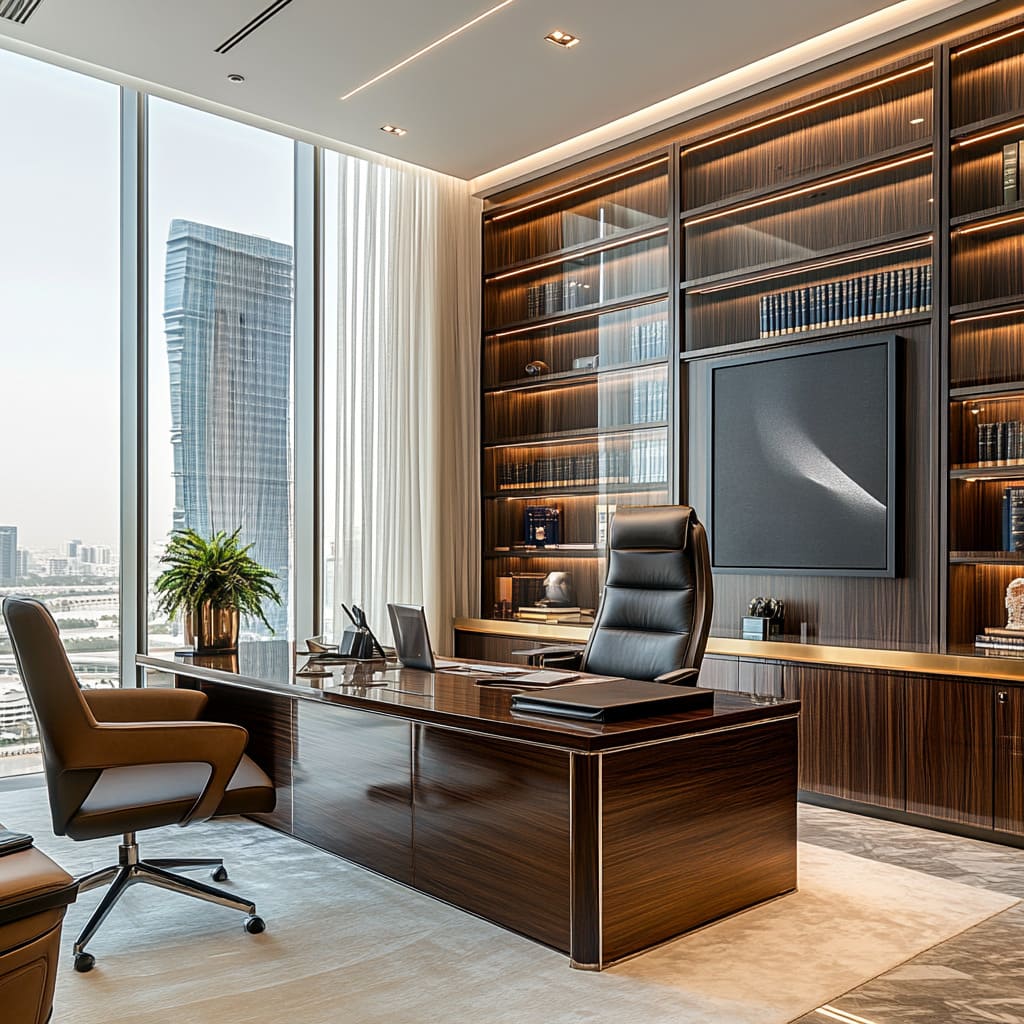
Art and decor play a crucial role in modernizing an office with dark wood finishes. A large piece of contemporary art, especially abstract or minimalist, can serve as a focal point in the room, drawing attention away from the darker wood tones and adding a splash of modernity. The art should complement the overall color scheme of the office, with muted tones for a subtle effect or bold colors for a more dramatic statement.
When it comes to decor, less is more. A few well-chosen items can make a significant impact without overwhelming the space. Consider incorporating modern sculptures, sleek vases, or a curated selection of books that reflect personal interests or professional achievements. The key is to keep the decor simple and cohesive, ensuring that each piece contributes to the overall aesthetic without creating clutter.
Shelving units provide an excellent opportunity to showcase these decorative items. Integrated lighting within the shelves can highlight key pieces, creating a gallery-like effect that adds sophistication and depth to the room. The display should be thoughtfully arranged, with enough space between items to let each one stand out while contributing to the overall harmony of the space.
6. Storage Solutions: Combining Style and Function
A modern office must balance form with function, and storage solutions are a critical part of this equation. Built-in cabinetry offers a streamlined look, providing ample storage without detracting from the room’s design. Choose cabinets with clean lines and minimal hardware to maintain the modern aesthetic. Push-to-open mechanisms or hidden handles can enhance the sleek appearance of these units.
Concealing clutter is essential for maintaining a tidy, modern workspace. Use storage solutions that blend seamlessly with the office’s design, keeping files, books, and personal items out of sight but easily accessible. Open shelving can also be used effectively, especially when paired with the right decor. The shelves can display a few carefully selected items, adding personality and warmth to the office without compromising its modern feel.
The key is to integrate storage solutions that are both practical and aesthetically pleasing. Everything should have its place, ensuring that the workspace remains organized and conducive to productivity. The right storage solutions can help you maintain a clean and uncluttered environment, which is essential for creating a modern office that feels spacious and inviting.
7. Color Palette: Achieving Modern Harmony
Balancing color is vital when working with dark wood finishes. The natural richness of dark wood can be beautifully offset by a well-chosen color palette that includes lighter, neutral tones. Shades of beige, gray, and white can be used to soften the impact of dark wood, creating a more open and airy feel. These colors should be used on walls, ceilings, and flooring to reflect light and enhance the room’s brightness.
Introducing accent colors can add a contemporary flair to the office. Subtle hints of blue, green, or even metallic tones can break up the dominance of dark wood, bringing freshness to the space. These accents can be introduced through decor items, upholstery, or even small pieces of furniture. The key is to use them sparingly, ensuring they complement rather than compete with the wood tones.
Maintaining a cohesive color scheme is crucial. All elements in the room, from furniture to decor, should work together to create a harmonious environment. The goal is to create a space that feels unified and well thought out, where every color serves a purpose in enhancing the overall design.
8. Views and Environment: Connecting with the Outdoors
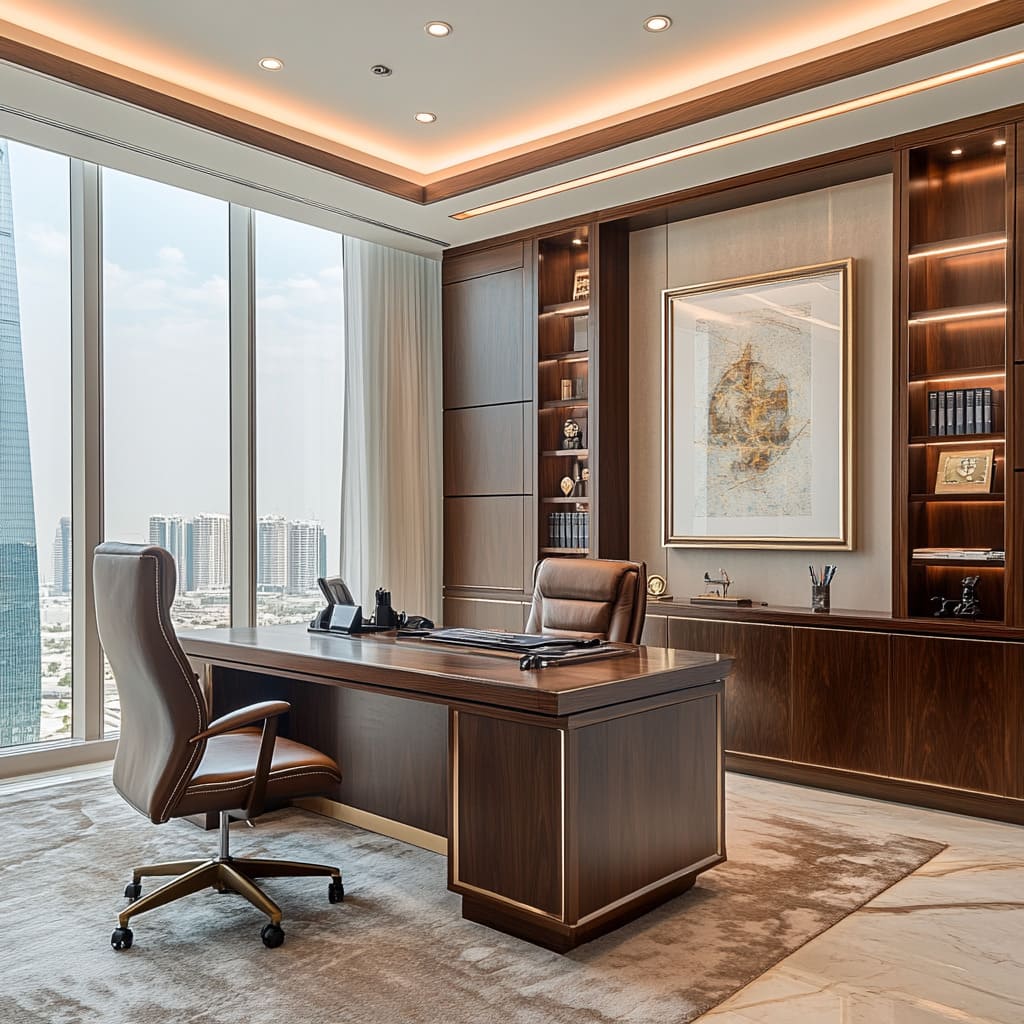
Incorporating views and the surrounding environment into your office design can significantly enhance its modern appeal. Large windows that allow for expansive views of the outdoors not only bring in natural light but also create a connection between the interior space and the outside world. This connection can make the office feel more open and less confined, which is especially important when dealing with darker interiors.
Positioning furniture to take advantage of these views can enhance the sense of space within the office. For example, placing the desk so that it faces the windows allows the occupant to benefit from the light and scenery while working. This arrangement can improve mood and productivity, making the office a more pleasant place to spend time.
Bringing the outdoors in through the use of plants or nature-inspired decor can also modernize a dark wood office. A well-placed potted plant or a small indoor garden can add a touch of nature, softening the formal lines of the wood and introducing a fresh, contemporary element. These natural touches can help balance the richness of the wood, making the office feel more vibrant and alive.
9. Seating and Comfort: Modernizing Through Ergonomics
Comfort is key in any modern office design, and seating plays a crucial role in achieving this. Selecting the right chairs is essential for both the aesthetics and functionality of the space. Ergonomic chairs upholstered in high-quality leather or fabric offer the support needed for long hours of work while maintaining a sleek and modern look. The design of the chairs should complement the overall style of the office, with clean lines and a minimalistic approach that aligns with the modern theme.
The arrangement of seating should also be considered carefully. In addition to the executive chair, a visitor’s chair placed in front of the desk can provide comfort for guests without disrupting the room’s flow. Choose seating that is both stylish and functional, ensuring that it enhances the overall design while providing the necessary comfort and support.
Balancing style with functionality is critical. The seating should not only look good but also feel good to use, encouraging productivity and well-being. Modern seating options often include adjustable features that allow for customization based on the user’s needs, which can be a valuable addition to any office.
10. Overall Atmosphere: Creating a Modern Masterpiece
The overall atmosphere of the office should reflect a balance of form and function, where every element works together to create a space that is both beautiful and practical. The integration of modern design elements with traditional dark wood finishes can result in a workspace that is not only aesthetically pleasing but also conducive to productivity and well-being.
It’s important to consider how the various components of the design—layout, materials, lighting, decor, and color palette—interact to create the desired atmosphere. The room should feel cohesive, with each element contributing to the overall design narrative. The space should reflect the personality and professional status of the person who occupies it, offering a sense of identity and style.
Ultimately, the goal is to create an office that feels like a modern masterpiece, where the richness of dark wood is enhanced by contemporary touches, resulting in a space that is as functional as it is stylish. By carefully considering each aspect of the design, you can transform a traditional dark wood office into a modern haven that meets the demands of today’s work environment while retaining its timeless appeal.
Conclusion
Transforming a dark wood office into a modern space is not just about updating its look; it’s about enhancing its functionality and creating an environment that supports both productivity and well-being. By rethinking the layout, updating materials and finishes, optimizing lighting, and carefully selecting decor, you can achieve a harmonious balance between traditional elegance and contemporary style. This guide provides a comprehensive roadmap for achieving this transformation, ensuring that your office is not only a place of work but also a reflection of your professional identity. Whether you’re starting with a small update or a complete redesign, these strategies will help you create an office that feels modern, inviting, and uniquely yours.
 luxury Interior Design trends in Dubai houses